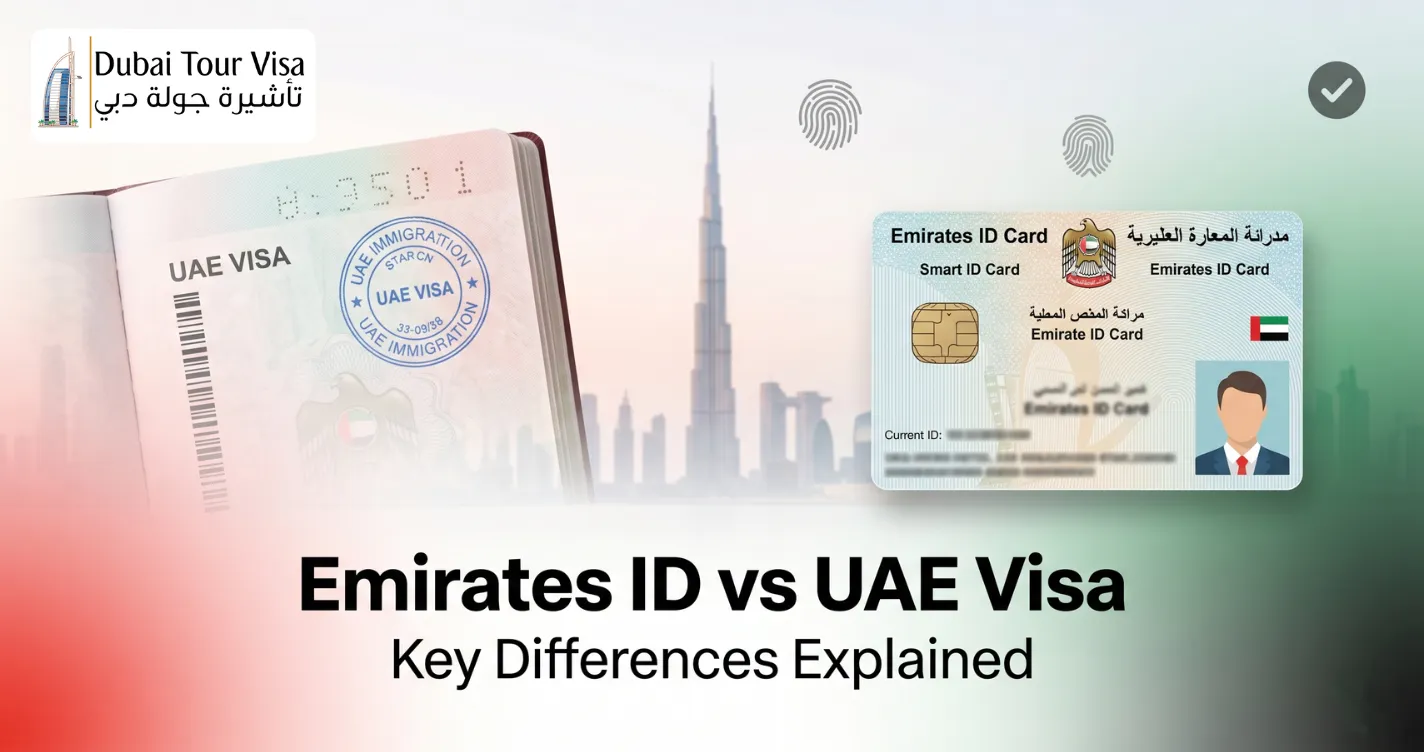
When dealing with legal documentation in the United Arab Emirates (UAE), two essential documents often create confusion: the UAE Visa and the Emirates ID. While both are crucial, they serve entirely different purposes. Understanding the difference between Emirates ID and UAE Visa is vital for anyone planning to visit, live, or work in the UAE.
This guide explains both documents in detail, their types, features, and how they differ from each other. Whether you're a tourist or a resident, this article will give you complete clarity.
Table of Contents
- What is the UAE Visa?
- Types of UAE Visas
- Tourist Visa
- Residence Visa
- Work Visa
- Transit Visa
- What is the Emirates ID?
- Key Features of Emirates ID
- Difference Between Emirates ID and UAE Visa
- Why Understanding the Difference Matters
- FAQs
- Conclusion
What is the UAE Visa?
A UAE Visa is an official document issued by the UAE government that allows foreign nationals to enter and stay in the country for a specified duration. It defines the purpose of your visit, whether for tourism, business, work, or transit.
The visa acts as a legal entry permit and is mandatory for non-citizens. Without a valid visa, entry into the UAE is not allowed.
Types of UAE Visas
1. Tourist Visa
This visa is designed for travelers visiting the UAE for leisure activities like sightseeing, shopping, or visiting family and friends.
- Short-term validity (14–60 days)
- Can be extended in some cases
- Ideal for vacations
2. Residence Visa
The residence visa allows individuals to live in the UAE for an extended period. It is usually sponsored by employers, family members, or businesses.
- Valid for 2–10 years
- Required for long-term stay
- Linked to Emirates ID
3. Work Visa
A work visa is issued to individuals who have secured employment in the UAE.
- Employer-sponsored
- Includes medical and documentation requirements
- Leads to residence visa
4. Transit Visa
This visa is issued for travelers passing through the UAE to another destination.
- Valid for 48–96 hours
- Short stay only
- Perfect for layovers
What is the Emirates ID?
The Emirates ID is a mandatory identification card issued by the Federal Authority for Identity, Citizenship, Customs, and Port Security (ICP) to all citizens and residents of the United Arab Emirates (UAE). It serves as the official proof of identity within the country and is a critical document required for nearly every aspect of daily life, including accessing government services, banking, healthcare, and legal processes.
Unlike a passport or visa, which primarily deal with travel and entry permissions, the Emirates ID is designed to establish a person’s identity and residency status within the UAE. Every individual residing in the UAE is legally required to apply for and carry this card at all times.
The Emirates ID contains essential personal information such as the holder’s full name, photograph, nationality, date of birth, and a unique identification number. This number remains constant throughout the individual’s lifetime and is used across various government and private sector platforms for identification and verification purposes.
One of the most advanced aspects of the Emirates ID is its integration of biometric data. The card securely stores fingerprints and facial recognition details, making it one of the most secure identity systems globally. This biometric integration significantly reduces the risk of identity theft, fraud, and duplication.
In addition to physical identification, the Emirates ID has evolved into a digitally integrated smart card. It is connected with numerous government databases, enabling seamless verification and faster service delivery. Residents can use it for e-services, digital signatures, and even smart gates at UAE airports for quick immigration clearance.
The Emirates ID also plays a crucial role in the UAE’s vision of becoming a fully digital and smart nation. It simplifies administrative procedures by reducing paperwork and allowing secure electronic transactions across multiple sectors.
Furthermore, the validity of the Emirates ID is directly linked to the individual’s residency status. It must be renewed periodically, typically every 2 to 10 years, depending on the type of residency visa. Failure to renew the Emirates ID on time can result in penalties or restrictions on accessing essential services.
In summary, the Emirates ID is not just an identification card—it is a comprehensive, secure, and multifunctional document that acts as the backbone of identity verification in the UAE. It ensures efficiency, security, and convenience for both citizens and residents, making it an indispensable part of life in the country.
Key Features of Emirates ID
1. Biometric Data Integration
The Emirates ID includes fingerprints and facial recognition, ensuring high security and preventing identity fraud.
2. Digital Transformation
The UAE has integrated the Emirates ID into digital systems, allowing users to access services online easily.
3. Multi-functional Usage
- Bank account opening
- Healthcare access
- Government services
- Rental agreements
4. Comprehensive Information
The card includes name, nationality, date of birth, and residency details.
5. Strong Security Features
It includes encryption, holograms, and digital signatures to prevent tampering.
6. Renewal Requirement
The Emirates ID must be renewed periodically to ensure accuracy.
Difference Between Emirates ID and UAE Visa
| Feature | UAE Visa | Emirates ID |
|---|---|---|
| Purpose | Entry and stay authorization | Identity verification |
| Issued To | Foreign nationals | Residents and citizens |
| Validity | Short or long-term | Long-term renewable |
| Usage | Travel and entry | Daily activities |
| Mandatory | Yes for entry | Yes for residents |
Why Understanding the Difference Matters
Understanding the difference between Emirates ID and UAE Visa is not just helpful—it is absolutely essential for anyone planning to visit, live, or work in the United Arab Emirates (UAE). These two documents serve distinct legal purposes, and confusing them can lead to serious consequences, including fines, delays, or even legal complications. Having a clear understanding ensures that individuals remain compliant with UAE regulations while enjoying a smooth and hassle-free experience.
For expatriates and travelers, knowing how these documents function helps in navigating everyday processes more efficiently. While the UAE Visa governs your entry and duration of stay, the Emirates ID becomes your primary identification tool once you are a resident. This distinction is especially important when dealing with official authorities, employers, landlords, and service providers.
1. Avoid Legal Penalties and Fines
One of the biggest advantages of understanding the difference is avoiding legal trouble. Overstaying a visa or failing to renew your Emirates ID on time can result in heavy fines and restrictions. By clearly knowing which document controls your stay and which confirms your identity, you can ensure timely renewals and compliance with UAE laws.
2. Seamless Access to Essential Services
The Emirates ID is required for accessing a wide range of services such as opening a bank account, applying for a SIM card, renting a property, or receiving medical care. Without it, completing these essential tasks can become difficult or even impossible. On the other hand, your UAE Visa determines whether you are legally allowed to stay and use these services in the first place.
3. Proper Documentation and Verification
Maintaining the correct documentation is critical in the UAE, where identity verification is strictly enforced. Understanding the difference between Emirates ID and UAE Visa ensures that you present the right document in the right situation—whether it’s for immigration checks, employment verification, or government procedures.
4. Better Travel and Residency Planning
For frequent travelers and expatriates, knowing how these documents work together helps in planning travel and long-term residency. Your visa status determines whether you can re-enter the UAE, while your Emirates ID simplifies re-entry through smart gates and fast-track systems at airports.
5. Smooth Employment and Business Processes
Employers in the UAE rely heavily on both documents for hiring and onboarding. A valid work visa is required for employment, while the Emirates ID is used for payroll setup, insurance, and legal identification. Understanding their roles helps employees and employers avoid administrative delays.
6. Enhanced Security and Identity Protection
The Emirates ID includes advanced biometric and digital security features, ensuring strong identity protection. Knowing its importance helps individuals safeguard their identity and use it correctly for secure transactions and verifications.
7. Compliance with UAE Digital Systems
The UAE is rapidly moving toward a fully digital ecosystem. The Emirates ID is integrated into many smart services and e-government platforms. Understanding its role alongside your visa ensures that you can fully benefit from these digital advancements without confusion or interruption.
In conclusion, understanding the difference between Emirates ID and UAE Visa is crucial for legal compliance, convenience, and overall peace of mind. It empowers individuals to manage their documents effectively, avoid unnecessary complications, and fully enjoy the opportunities available in the UAE.
Conclusion
In conclusion, both documents are essential but serve different roles. The UAE Visa allows entry into the country, while the Emirates ID acts as proof of identity and residency.
Understanding their differences ensures compliance with UAE laws and makes your stay or visit smooth and hassle-free.
Frequently Asked Questions
Dubai Tour Visa – Frequently Asked Questions help travelers understand tour types, activities, timings, safety tips, booking process, and best travel experiences.
Leave a Comment